



Educational Benefits of Ant Kits for Kids and Classrooms
Dig a little deeper! Ant kits are powerful hands-on learning tools that bring science to life, allowing students to observe real insect behavior while exploring biology, ecology, and complex systems through direct, engaging experience.
5 Educational Benefits of Insect Lore Ant Kits
Ant kits offer many educational benefits. They help children develop Scientific Observation Skills, encourage curiosity about nature, learn life cycles and biology, understand ecosystems, and more!
1. Develop Scientific Observation Skills
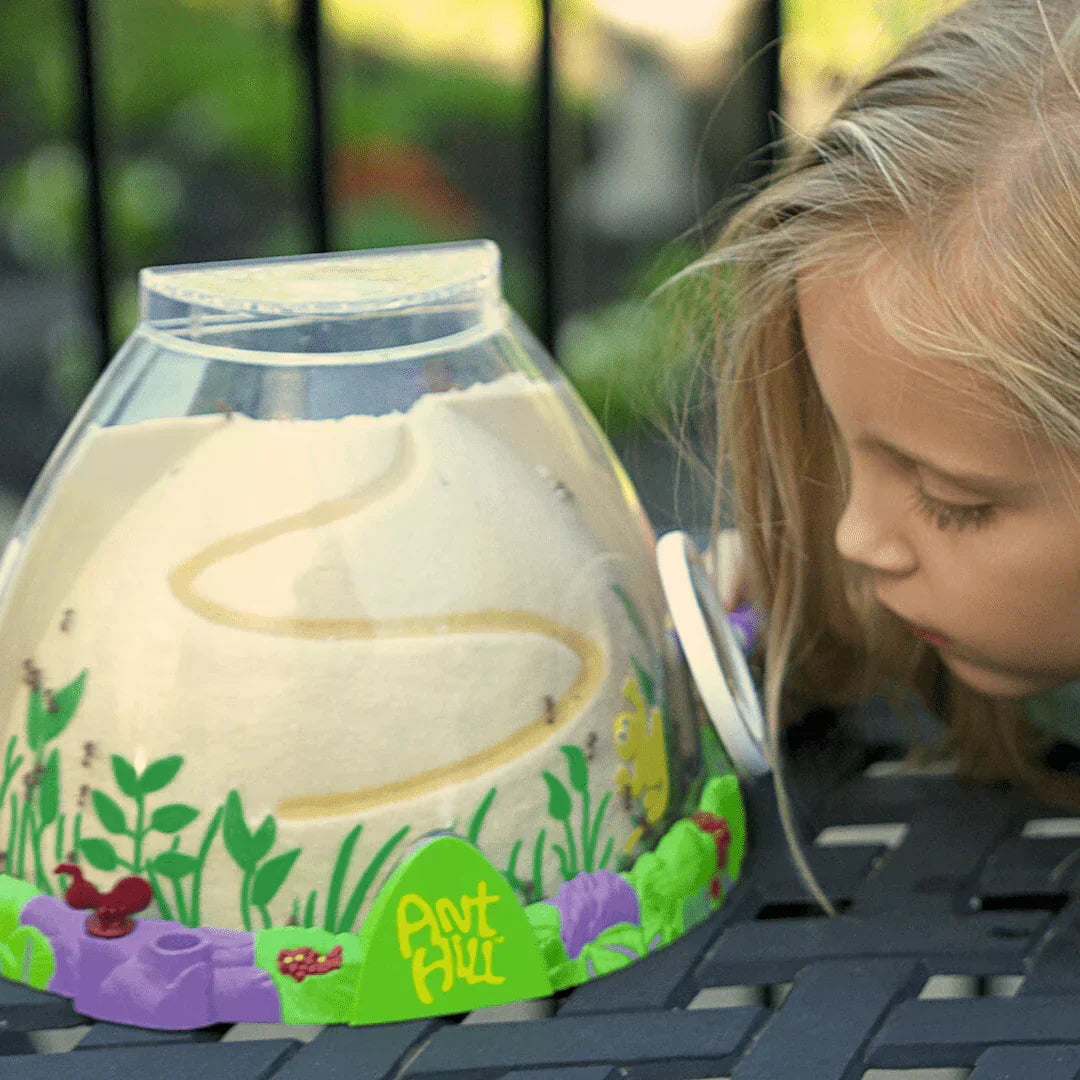
Using an ant hill kit as an educational tool offers a hands-on way to learn about biology, ecology, and teamwork. It allows students to observe ants’ behaviors, such as cooperation, communication, and problem-solving, in real time. This direct interaction helps deepen understanding and curiosity beyond textbooks.
For example, students might learn how ants work together to build tunnels and gather food, highlighting the importance of collaboration. In daily life, this lesson can translate into improved teamwork skills, encouraging children to cooperate with friends or classmates when solving problems or completing group activities. Observing an ant hill also teaches patience and responsibility, as students must care for the ants and maintain their environment, skills that are valuable in many real-world situations.
2. Learn About Biology and Life Cycles
3. Understand Ecosystems and Social Behavior
An ant hill kit provides a unique and engaging way to understand ant ecosystems and social behavior. By observing ants in a controlled environment, students can learn about the structure of ant colonies, roles such as workers and queens, and how ants interact to maintain their community. This hands-on experience makes complex biological concepts more accessible and memorable.
For example, students may notice how ants communicate through pheromones to organize tasks efficiently. This observation can inspire lessons about effective communication and cooperation in human settings. Understanding ant ecosystems through the ant hill also fosters a greater respect for nature, encouraging more responsible environmental behaviors.
4. Encourage Curiosity and Scientific Thinking
5. Nurture Responsibility and Care for Living Creatures
By observing the daily activities of your busy ants, your children will gain a greater sense of compassion and responsibility for the living things around us - no matter how small! Ant Hill kits turn responsibility into something you can see crawling, digging, and depending on you. Students must monitor moisture, provide food, and maintain a stable environment, learning that small, consistent actions keep a living system healthy. This daily care builds accountability and patience, as neglect quickly shows consequences within the colony.
Ant Hill Kit Classroom Applications
Insect Lore Ant Hill has countless applications to any classroom curriculum or at-home lesson. One ant colony provides a wide array of integrated educational opportunities. Let's dig in:
Curriculum Integration
Ant Hill kits bring insects, ecosystems, and life cycles into motion. Students observe ant anatomy and behavior, track colony growth, and see ecosystem roles like resource use and waste management. For example, while studying life cycles, they can connect brood development stages to broader biological patterns, transforming static lessons into living systems. The possibilities are endless!
Cross-Subject Tie-In
Group Learning Opportunities
Assigning Student Roles
Sparking Class Discussion
Ant colony behavior illustrates how cooperation and teamwork are essential for a community’s success. Observing ants working together to build tunnels, gather food, and protect their colony can spark discussions about humans’ social roles and responsibilities. This example encourages students to reflect on the importance of collaboration, shared goals, and supporting one another in their own communities and daily live
Explore the Educational Benefits of Insect Lore Ant Hill Kits
Insect Lore Ant Hill Kits bring all these many learning benefits together in one engaging, classroom-ready solution. Designed for close observation, they support science inquiry, cross-curricular learning, and collaborative discovery. With easy setup and guided materials, teachers can seamlessly integrate observation, teamwork, and critical thinking - turning lessons into living experiences students can see, share, and learn from together!
Related products



Ant Kit Safety and Care Guide for Teachers
Insect Lore Ant habitats turn a hidden world of abstract biology into fascinating daily observation, letting students witness colony behavior, cooperation, and lifecycle firsthand and in front of their very eyes.


How Do Ants Communicate? Understanding Ant Pheromones
Ant pheromones guide everything from foraging trails to alarm signals, allowing thousands of individuals to act as one coordinated superorganism. These chemical messages are precise, adaptable, and essential for survival. By decoding how ants communicate through pheromones, scientists are able to find remarkable insights into collective behavior, ecology, and even innovative solutions for human technology and complex systems.


Why Ant Kits Make the Perfect STEM Present
When it comes to gaining the skills and knowledge required to be a strong learner and critical thinker, few products offer more than Insect Lore's Ant Kits! An ant kit may look simple, but it opens a window into a hidden world of science so often hidden from young minds.

Enter Your Voucher Code Below
Our insects are sensitive to outdoor temperatures. We recommend ordering when daytime temperatures are below 90 degrees.
We are unable to combine redemption fees. If you are redeeming 1-5 voucher codes, please complete separate purchases through our website for each voucher. If you are redeeming 6+ vouchers, please email us at customerservice@insectlore.com with your voucher codes and shipping address and we'll send you a custom invoice for payment.
$title
Thank you for Redeeming your voucher!
You redeemed a $title
Redemption Fee :$redemptionFee
$upsellList
$ctaLabel

Don't miss this special one Time Offer.
Check the Box to Add this Special Offer to your Cart
$upsellTitle
$upsellPrice
Don't miss this special one Time Offer.
Check the Box to Add this Special Offer to your Cart
$upsellTitle
SAVE $upsellSavePrice