

By Spencer McManamna July 08, 2026 4 min read

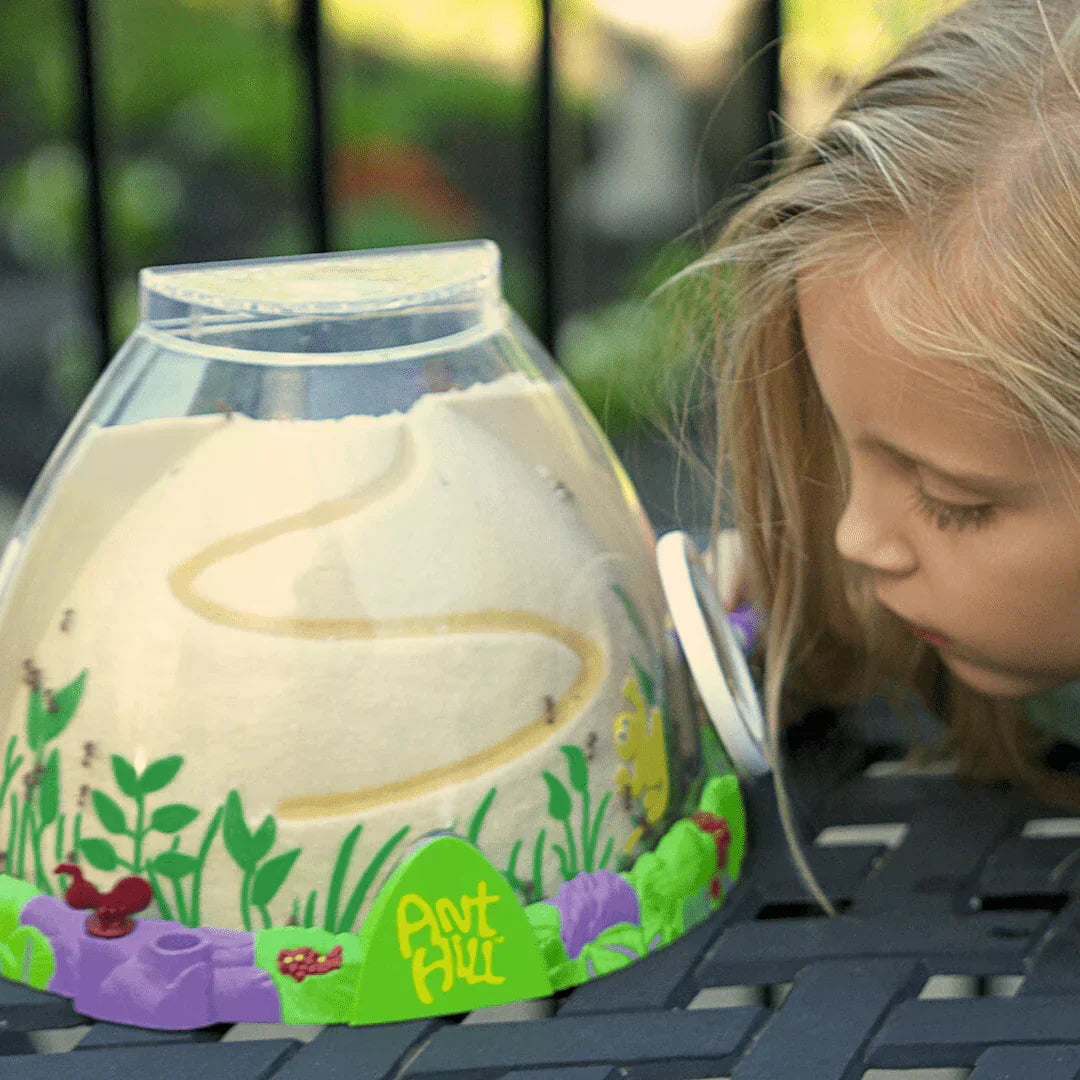
Insect Lore Ant habitats turn a hidden world of abstract biology into fascinating daily observation, letting students witness colony behavior, cooperation, and lifecycle firsthand and in front of their very eyes. Realizing this value depends on the teacher, who must maintain proper humidity, temperature, and food levels—ensuring a safe, healthy environment where both curious students and thriving ants can learn and live well.

Understanding Your Ant Colony

Western Harvester Ants are large, curious, reddish-brown ants common in classroom ant farms, typically measuring ¼ to ½ inch long. They're known for their industrious, methodical foraging behavior, in which workers travel specific paths to collect seeds, which make up the bulk of their diet. These industrious workers can often be seen clearing debris and pebbles from around their nest entrance.

Colonies are highly organized, with distinct roles for workers, and activity tends to peak during warmer daylight hours, slowing noticeably at night or in cooler temperatures. Individual worker ants can live for several months to about a year, while a harvester ant queen, if present, may live much longer. For teachers, expect steady tunneling, seed-hoarding, and periodic bursts of visible activity as normal, healthy behavior.

Classroom Safety

Here's how to keep your ant habitat a safe, clean and cozy home for your new ant-venturers! 

Handling Rules

Your ants will arrive in a small tube. Do not open them yet! Place the tubes in the refrigerator for 10-15 minutes to slow the ants down for easier transfer. It's important to remember not to handle the ants or touch them, and to keep the habitat closed at all times! 

Preventing Escapes 

Ensure the clear dome of the habitat is securely fastened to the base, otherwise some curious ants may crawl outside. Also make sure that the top lid is tightly closed, otherwise your ants will climb up to the top to take a peek out! Avoid rough handling of your habitat, which can 

Ant Kit Setup

Setting up your Insect Lore Ant Habitat is a breeze! Let's dig in to see how to start your classroom adventure:

Initial Setup

  1. First, add the E-Z Dig Sand™ to your habitat. 
  2. Snip a small corner off the sandbag.
  3. Measure 1/3 cup of water.
  4. Open the Ant Hill lid, facing the flat side toward you, and locate the small “half funnel” hole at the top.
  5. Pour 1-2 inches of sand into the back flat area of the Ant Hill. Don’t worry about sand falling onto the front.
  6. Use the sand rod to tamp the sand into the corners, allowing more space for digging. Helpful Hint: Tap the base of the Ant Hill gently on a flat surface to help the sand settle.
  7. After tamping, add 10 dropperfuls of water to the sand. Repeat steps D, E, and F until the sand is flush with the top.
    • You may have leftover sand; that’s okay.
    • You should use the entire 1/3 cup of water to achieve a “sandcastle texture.”

Now it's time to add your ant friends! 

  1. While the ants cool, create a starter tunnel by inserting the sand rod into the back of the habitat about 3 inches into the sand and then pulling it out.
  2.  After cooling in the refrigerator for 10-15 minutes, the ants are ready to be transferred. Hold an ant tube upright and tap it gently.
  3. Open the habitat lid, twist and remove the cap from the first tube, and tap the ants into the Ant Hill. Repeat with the second tube and close the habitat lid.
  4. The ants may be sluggish at first but will soon explore and dig! 

Location 

Make sure to select a stable, quiet location that minimizes disturbance and vibrations. Ensure that it is kept in a cool spot out of direct sunlight. You don't want your ant friends overheating in the sun! 

Daily Care and Maintenance

Now it's time to learn how to take care of your busy ant friends. 

  1. Food: Every 2-3 days, feed your ants one sunflower seed or a small piece of celery, apple, or carrot. Drop it into the Ant Hill and replace it after they eat it.
  2. Provide tiny portions and avoid overfeeding!
  3. Once every 2-3 days use your dropper to add 2-3 drops of water into the back of the Ant Hill and onto the sand - don’t overwater!

Monitoring Moisture Levels

Ensure that no moisture is forming on the inside of the clear dome! This can cause bacteria or mold to form, which may be harmful to your ants. Your Ant Habitat has all the ventilation it needs to provide your insects with enough air and circulation. 

Observation Best Practices

Keep a close watch on your ant friends as they build their interconnected tunnels and form a living, breathing community. How does this thriving colony change from day to day? How busy are your ants in between meals, compared to their activity after feeding? How do they maintain their home and build new tunnels, and what do they do with the sand they excavate? 

Explore Ant Colony Behavior with Insect Lore

Watching your colony of Insect Lore Ants dig, forage, and build day after day gives students something few lessons can: real evidence of biology, engineering, and cooperation happening right before their eyes. That kind of firsthand learning sticks in a way worksheets never do, and it all rests on the focused, steady care a teacher provides behind the scenes!

Our quality ant farm kits make that job even easier, giving both the ants and the classroom the right conditions to thrive, including proper ventilation, easy observation, and simple maintenance routines that fit into your busy teaching schedule. Now you have the tools to transform this experience into a lasting lesson in patience, biology, and the everyday wonder of the natural world.

Educational Benefits of Ant Kits for Kids and Classrooms

June 01, 2026 4 min read

Dig a little deeper! Ant kits are powerful hands-on learning tools that bring science to life, allowing students to observe real insect behavior while exploring biology, ecology, and complex systems through direct, engaging experience.

Read More
How Do Ants Communicate? Understanding Ant Pheromones

June 01, 2026 5 min read

Ant pheromones guide everything from foraging trails to alarm signals, allowing thousands of individuals to act as one coordinated superorganism. These chemical messages are precise, adaptable, and essential for survival. By decoding how ants communicate through pheromones, scientists are able to find remarkable insights into collective behavior, ecology, and even innovative solutions for human technology and complex systems.

Read More
Why Ant Kits Make the Perfect STEM Present

March 16, 2026 5 min read

When it comes to gaining the skills and knowledge required to be a strong learner and critical thinker, few products offer more than Insect Lore's Ant Kits! An ant kit may look simple, but it opens a window into a hidden world of science so often hidden from young minds.

Read More