



How Do Ants Communicate? Understanding Ant Pheromones
Beneath the bustling surface of an ant colony lies a hidden language written in scent. Ant pheromones guide everything from foraging trails to alarm signals, allowing thousands of individuals to act as one coordinated superorganism. These chemical messages are precise, adaptable, and essential for survival. By decoding how ants communicate through pheromones, scientists are able to find remarkable insights into collective behavior, ecology, and even innovative solutions for human technology and complex systems.
How Ants Communicate
Our tiny ant friends have many complex ways to communicate. Let's dig in!
-
Chemical Communication (Pheromones) - Pheromones serve as ants’ primary communication system, forming a highly complex chemical language that coordinates behavior, organizes colonies, and enables precise, large-scale collective decision-making.
-
Tactile Communication - Ants use antennae and leg contact to exchange information at close range, detecting chemical cues, sharing food, confirming identity, and coordinating tasks through precise tactile interactions.
-
Stridulation - Ants produce sound through stridulation, rubbing specialized body parts together to create vibrations used for communication, signaling distress, coordinating tasks, and interacting within dark underground environments.
-
Trophallaxis - Through trophallaxis, ants exchange fluid mouth-to-mouth, sharing nutrients and transferring chemical signals that convey colony status, reinforce social bonds, and coordinate collective behavior.
What Are Ant Pheromones?
Ant pheromones are chemical signals released by ants to communicate information to other members of the colony. These scent-based messages regulate nearly every aspect of colony life, from marking foraging trails and signaling danger to coordinating reproduction and maintaining social structure. By interpreting pheromone cues, ants function as a highly organized collective, allowing thousands of individuals to respond quickly and efficiently to their colony needs.
Where Do Ant Pheromones Come From?
So how do ants produce such powerful pheromones?
Dufour's Gland
The Dufour’s gland is a specialized exocrine gland located near the ant’s sting apparatus in the abdomen. It produces a variety of chemical compounds that function as pheromones, contributing to communication within the colony. These secretions can play roles in trail marking, alarm signaling, and nestmate recognition, helping ants coordinate complex social behaviors and maintain the organization essential for colony survival.
Venom/Poison Gland
The venom, or poison gland, is located in the abdomen and is typically connected to the stinger in many ant species. While primarily used for defense and subduing prey, it also produces chemical compounds that function as alarm pheromones. When released, these signals rapidly alert nearby workers to danger, triggering coordinated defensive responses and helping the colony react swiftly to threats.
Mandibular Gland
The mandibular gland is located in the head, opening near the base of an ant’s mandibles. It produces potent chemical secretions that act as pheromones, often used in alarm signaling and recruitment. When released, these compounds can rapidly mobilize nearby workers, coordinate defense, or direct nestmates to resources, making the mandibular gland a key player in the colony’s fast-paced communication network.
Tibial and Tarsal Glands
The tibial and tarsal glands are located in the lower segments of an ant’s legs, specifically within the tibia and tarsus. These glands secrete chemical cues that are deposited onto surfaces as ants walk, contributing to trail formation and environmental marking. By leaving behind these subtle chemical traces, ants help guide nestmates to food sources and reinforce foraging routes, supporting coordinated movement throughout the colony.
Types of Ant Pheromones
There isn't just one type of ant pheromone! There are several, each playing a very specific role.
Trail Pheromones
Ants create chemical highways by leaving behind pheromones as they travel, turning a lone discovery into a shared resource. A forager that finds food returns to the nest while laying a scent trail, which friendly ants follow and reinforce with their own deposits, strengthening the route like footsteps in fresh snow. In many species, the Dufour’s gland and poison gland contribute trail compounds, while leg-based tibia and tarsal glands can help maintain surface markings. For example, a worker locating a fallen crumb lays a pheromone path on the return journey. Within mere minutes, a steady procession forms, each ant refreshing the trail until the food source is exhausted.
Alarm Pheromones
Queen Pheromones
Recruitment Pheromones
Recognition Pheromones
Discover the Secret Communication of Ants with Insect Lore Ant Kits
Pheromones transform tiny ants into a living network! From guiding foragers to defending the nest and maintaining social order, these signals power the colony’s remarkable coordination. By understanding pheromones, we glimpse how simple rules create complex systems in nature. It’s a reminder that even the smallest creatures can build sophisticated worlds, one invisible message at a time.
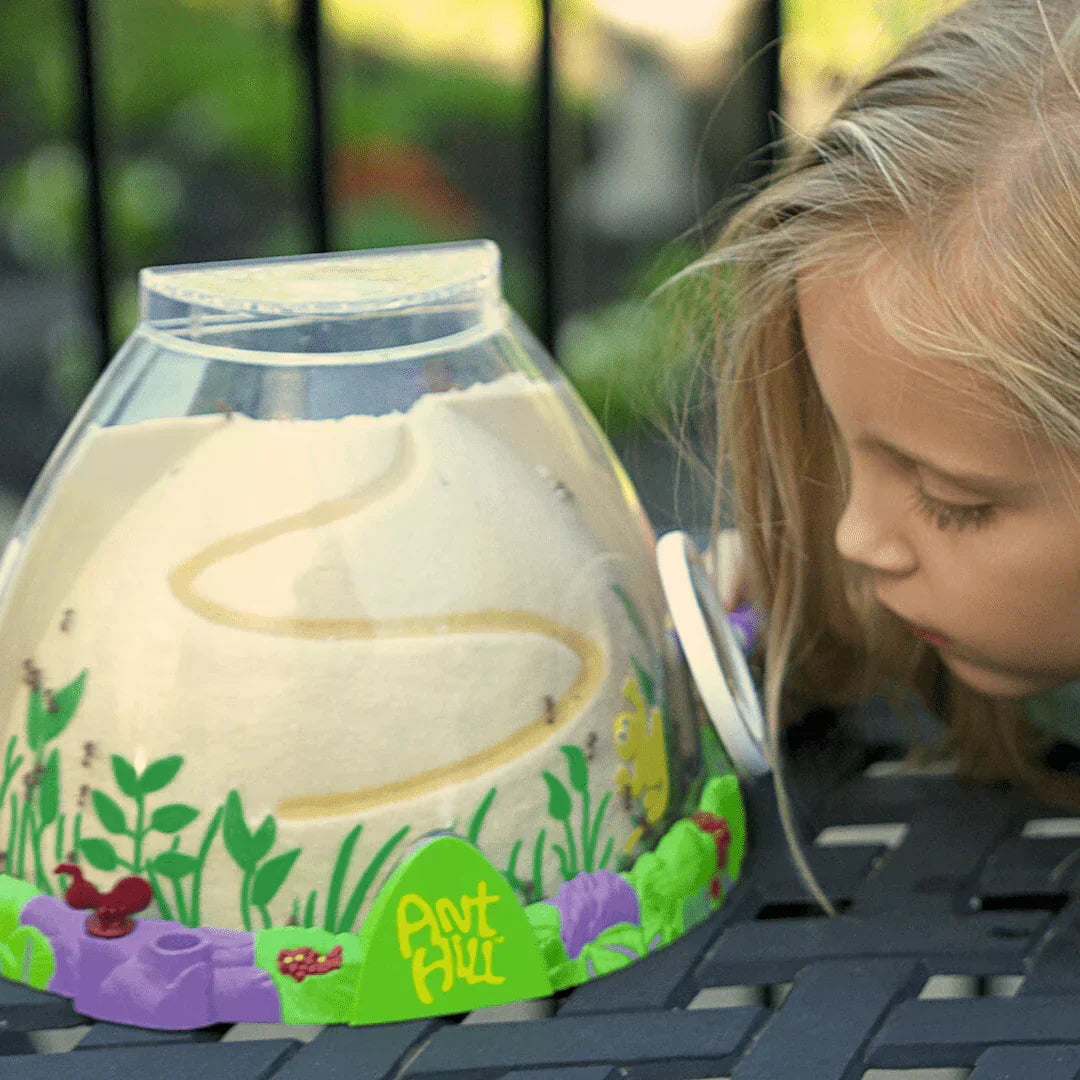
Ready to witness and observe the fascinating communication of these incredible ants? See it with your very own eyes with Insect Lore's Ant Hill kits and accessories and dig deeper into an incredible hidden world!
Related products



Ant Kit Safety and Care Guide for Teachers
Insect Lore Ant habitats turn a hidden world of abstract biology into fascinating daily observation, letting students witness colony behavior, cooperation, and lifecycle firsthand and in front of their very eyes.


Educational Benefits of Ant Kits for Kids and Classrooms
Dig a little deeper! Ant kits are powerful hands-on learning tools that bring science to life, allowing students to observe real insect behavior while exploring biology, ecology, and complex systems through direct, engaging experience.


Why Ant Kits Make the Perfect STEM Present
When it comes to gaining the skills and knowledge required to be a strong learner and critical thinker, few products offer more than Insect Lore's Ant Kits! An ant kit may look simple, but it opens a window into a hidden world of science so often hidden from young minds.

Enter Your Voucher Code Below
Our insects are sensitive to outdoor temperatures. We recommend ordering when daytime temperatures are below 90 degrees.
We are unable to combine redemption fees. If you are redeeming 1-5 voucher codes, please complete separate purchases through our website for each voucher. If you are redeeming 6+ vouchers, please email us at customerservice@insectlore.com with your voucher codes and shipping address and we'll send you a custom invoice for payment.
$title
Thank you for Redeeming your voucher!
You redeemed a $title
Redemption Fee :$redemptionFee
$upsellList
$ctaLabel

Don't miss this special one Time Offer.
Check the Box to Add this Special Offer to your Cart
$upsellTitle
$upsellPrice
Don't miss this special one Time Offer.
Check the Box to Add this Special Offer to your Cart
$upsellTitle
SAVE $upsellSavePrice