By Spencer McManamna August 10, 2026 5 min read

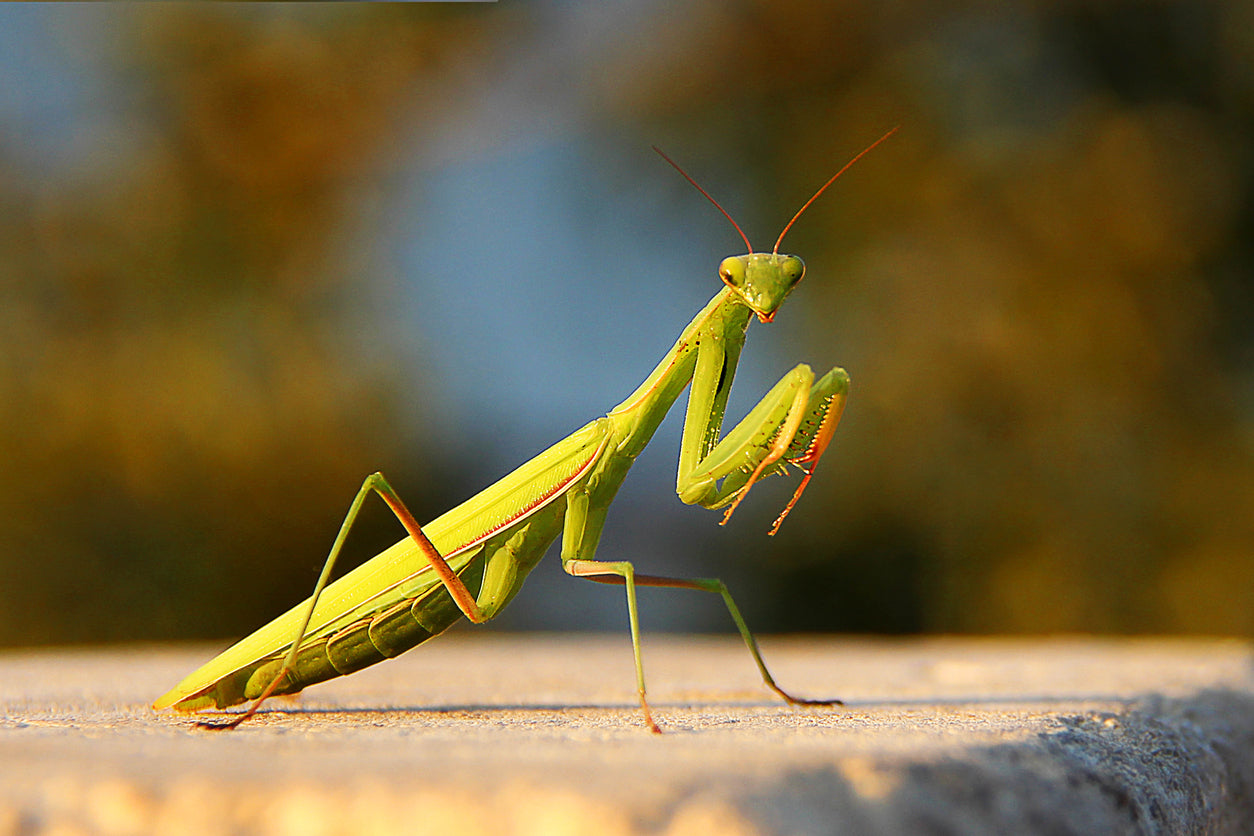
Meet the Mantis! Praying mantises are a remarkably diverse order of insects, with over 2,400 species spread across hundreds of genera and dozens of families worldwide. They inhabit every continent except Antarctica, thriving in tropical rainforests, grasslands, and even deserts. In this article, you'll learn about mantis anatomy, hunting strategies, life cycles, and how to identify common species you might encounter on your outdoor travels.


Praying Mantis Species

It's a Mantis Multitude! Let's begin by exploring some of the most famous and recognizable Praying Mantis species, all living and thriving in a diverse amount of environments and ecosystems. You may have seen one or two of these friendly faces in your own life already! 

Carolina Mantis 

The Carolina Mantis (Stagmomantis Carolina) is one of North America's native mantis species, typically growing 2 to 2.5 inches long. Its coloring ranges from mottled gray-brown to green, helping it blend into bark and foliage to avoid predators. Found throughout the southeastern and central United States, it's the official state insect of South Carolina! Unlike the larger, non-native Chinese mantis, the Carolina mantis has shorter wings that don't fully cover its abdomen in adults, making it easy for even the untrained eye to tell the two apart.


Chinese Mantis

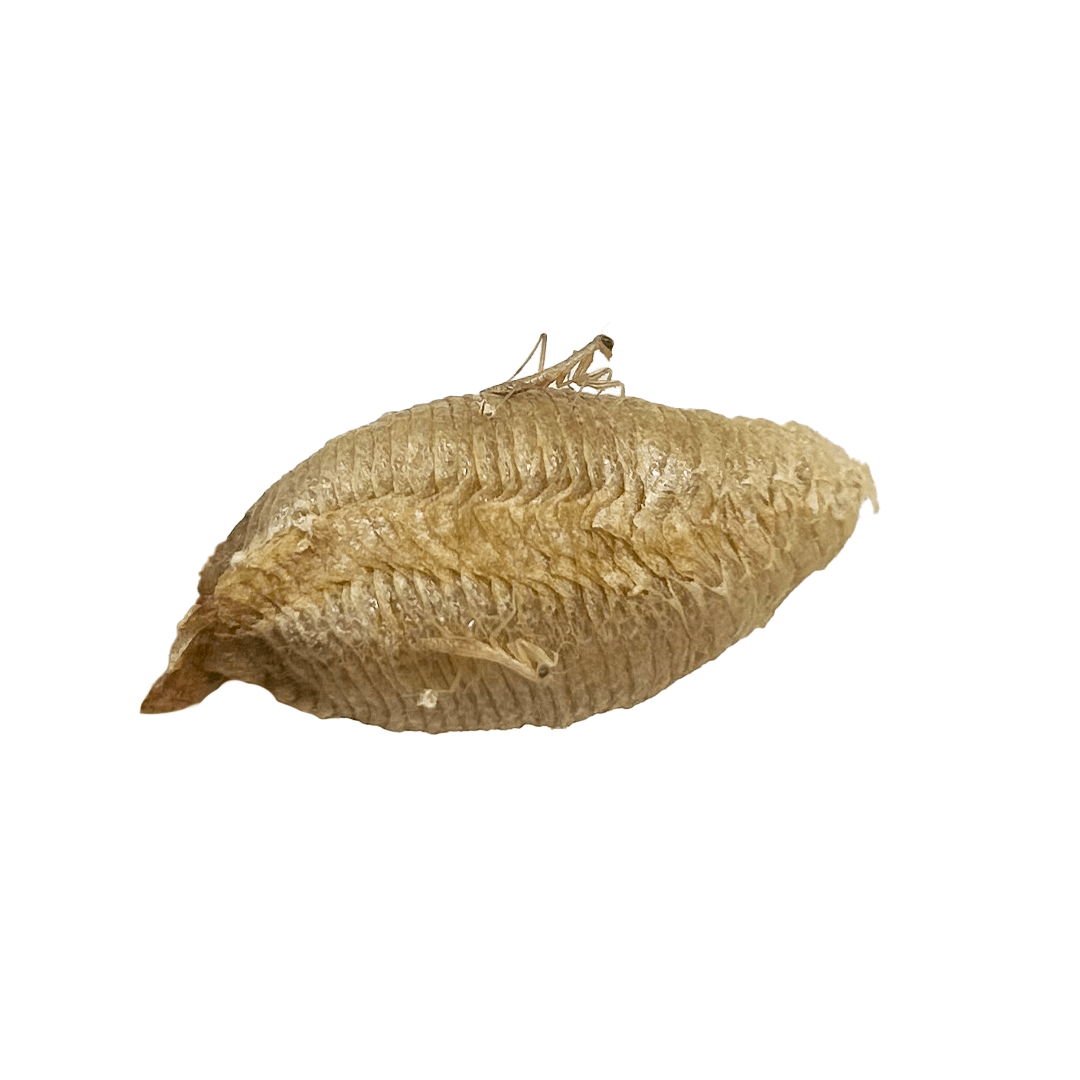
One of the most recognizable species of Mantis isn't even native to North America. The Chinese mantis (Tenodera sinensis) is one of the largest mantis species found in North America, growing 3 to 5 inches long. Its coloring is typically green or brown with a distinctive pale green stripe running along the edges of its wings. Though native to Asia, it was introduced to the United States in the 1890s and is now widespread across the country. One of their distinguishing traits are their "marshmallow-shaped" egg cases, which can hold as many as 150 mantids inside! 


European Mantis

The European mantis (Mantis religiosa) typically grows 2 to 3 inches long and displays coloring that ranges from bright green to tan or brown, often with a distinctive black-and-white "bullseye" marking on the inside of its front legs. Native to Europe, it was introduced to the United States in the late 1800s and is now found across much of the northern US.


Orchid Mantis

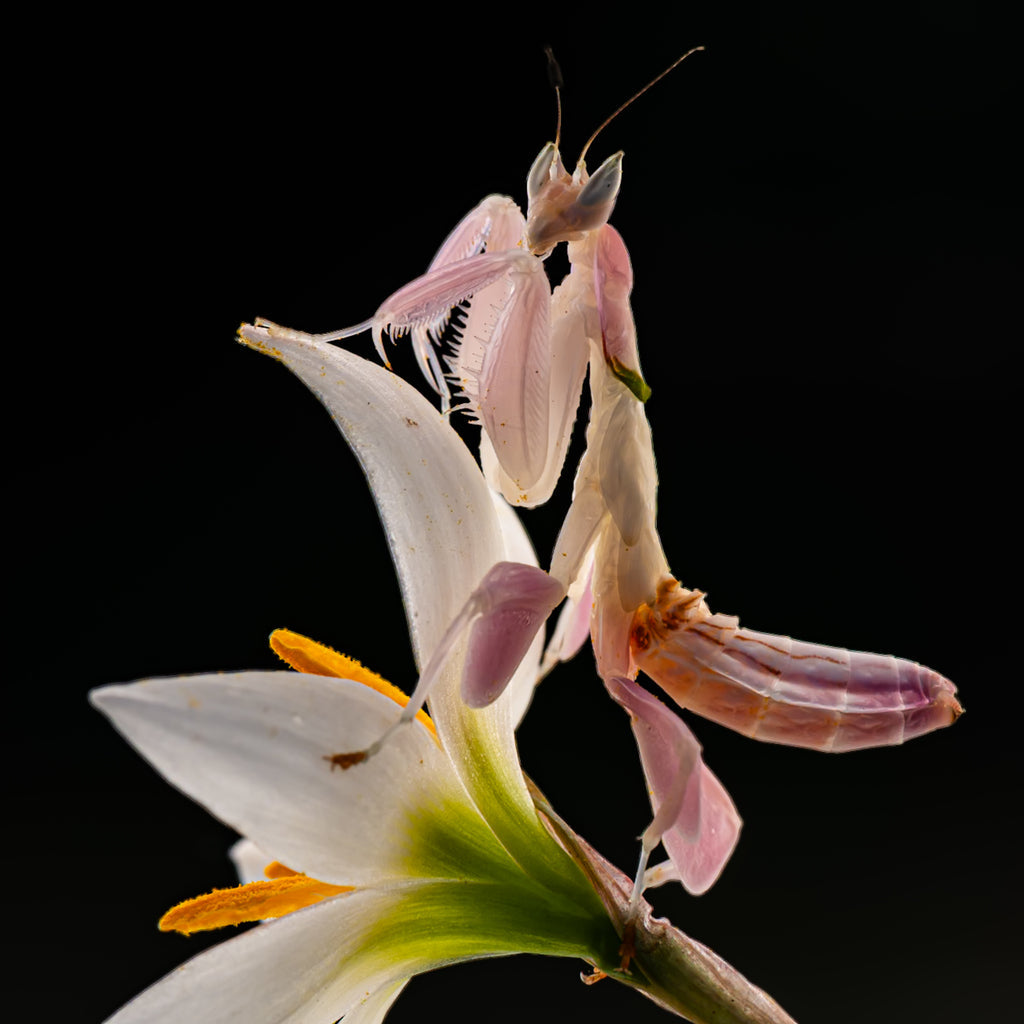
The orchid mantis (Hymenopus coronatus) is a striking species native to the rainforests of Southeast Asia, particularly Malaysia and Indonesia. Females grow up to 2.5 inches long, while males are notably smaller. Its coloring ranges from white to soft pink, with flattened, petal-like leg lobes that mimic flower petals. This mantis practices aggressive mimicry: rather than simply hiding among flowers, it actually resembles a blossom itself, luring pollinating insects like bees and flies directly to it!


Devil’s Flower Mantis

The Devil's Flower mantis (Idolomantis diabolica) is one of the largest mantis species, with females reaching up to 5 inches long. It displays vibrant coloring, with green, white, and purple patterned wings resembling flower petals. Native to arid regions of East Africa, including Tanzania, Kenya, and Somalia, it favors dry savanna and scrubland habitats. When threatened, it performs a dramatic "startle" display, flaring its brightly patterned wings and raising its spiked forelegs to appear larger and more menacing, a striking example of defensive behavior.


Dead Leaf Mantis

True to it's name, this Mantis looks exactly like a Dead Leaf! The Dead Leaf mantis (Deroplatys desiccata) grows 2.5 to 3.5 inches long and displays mottled brown coloring with textured, vein-like patterns that closely resemble a dried, decaying leaf. Native to the tropical rainforests of Southeast Asia, particularly Malaysia and Indonesia, it thrives in dense forest floor leaf litter. Beyond its remarkable camouflage, this mantis has a broad, flattened abdomen it can flatten further against surfaces to enhance its leaf-like disguise, making it nearly invisible to both predators and prey.

Wandering Violin Mantis

A spectacular sight in the wild, the Wandering Violin mantis (Gongylus gongylodes) grows 3 to 4.5 inches long and gets its name from its elongated, violin-shaped body. Its coloring is typically pale tan to brown, (sometimes with lavender or pink hues) resembling dried leaves or twigs. Native to India and other parts of South Asia, it inhabits dry scrubland and grassy regions. It exhibits a swaying, rocking motion as it walks, mimicking a leaf or twig blowing in the breeze, a behavior called "wind mimicry" that helps it evade hungry predators.


Giant Asian Mantis

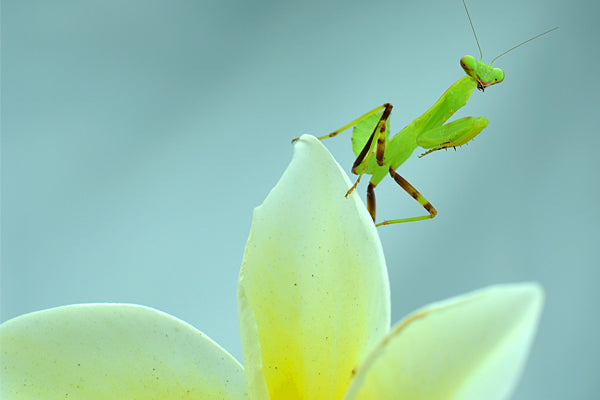
The Giant Asian mantis (Hierodula membranacea) grows 3-4 inches long and displays bright green/brown coloring, perfect for helping it blend into dense foliage. Native to South and Southeast Asia, including India, China, and Malaysia, it thrives in tropical and subtropical vegetation. Its broad, shield-shaped pronotum and thick, muscular forelegs give it a strong build compared to other mantis species.

Jeweled Flower Mantis

When it comes to camouflage, flower is power! The Jeweled Flower Mantis (Pseudocreobotra wahlbergii) is a small, striking mantis native to parts of eastern and southern Africa. Adults typically reach about 1.5–2 inches in length and are usually bright green or white with intricate patterns and a distinctive eye-like marking on each forewing.


Egyptian Flower Mantis

Time to take a trip past the pyramids! The Egyptian Flower Mantis (Blepharopsis mendica) is a slender, medium-sized mantis found across parts of North Africa, the Middle East, and southern Europe. Adults typically grow to around 2 to 2.5 inches long and range from pale tan to greenish or grayish-brown, helping them blend into dry vegetation. 


Brazilian Dragon Mantis

The Brazilian Dragon Mantis (Stenophylla cornigera) is a remarkable leaf-mimicking mantis native to parts of Brazil and other areas of tropical South America. It looks more like a stick bug than a mantis! Adults grow to around 2 to 3 inches long and are typically brown, tan, and green, with an elongated body and jagged edges that resemble a dried leaf. Its most distinctive trait is its extraordinary camouflage. When resting among foliage, its body shape, coloring, and irregular edges help it blend into the surrounding vegetation and avoid detection by any sinister predators!

Malaysian Shield Mantis

The Malaysian shield mantis (Rhombodera basalis) is a species of praying mantis found in Malaysia, Indonesia, Thailand, Singapore, and Borneo, reaching up to 10 centimeters (about 4 inches) long, with most colored bright green. Its thorax is shaped like an elliptical shield, which enhances its camouflage among leaves and plants. 

Explore the World of Insect Metamorphosis with Insect Lore 

After learning about these marvelous mantises, it's clearer than ever that the world of nature is filled with countless incredible surprises and breathtaking sights. Witness the incredible moments of nature yourself with Insect Lore's Growing Kits! Visit our seasonal Praying Mantis Collection here, or experience the wonders of the Butterfly Life Cycle with our iconic Butterfly Growing Kits. That's not all: we've also got Ladybug Growing Kits and Ant Kits if you're looking to dig even deeper! 

Defense Mechanisms of the Praying Mantis

June 29, 2026 3 min read

The Praying Mantis may be tiny, but there's more to these insects than meets the eye! in a dangerous wild world filled with hungry predators, the mantis needs to use every tool at it's disposal to survive and thrive! Read on to discover how the Praying Mantis uses a unique and powerful system of mechanisms to make its way in nature. 

Read More
Cultural Symbolism of the Praying Mantis

June 29, 2026 4 min read

In this article, you’ll discover the meanings and beliefs associated with the praying mantis across different cultures. You won't believe what you'll discover! 

Read More
What Should I Do With A Praying Mantis Egg Case?

December 10, 2025 4 min read

It's finally here - your Insect Lore Praying Mantis Egg Case has arrived! Now that it's here, you'll need to learn all the tips and tricks needed to care for it. Luckily we're here to help! Read on to make the most of your Insect Lore Praying Mantis STEM experience - learning how to handle them, care for them, observe their behavior and more! 

Read More