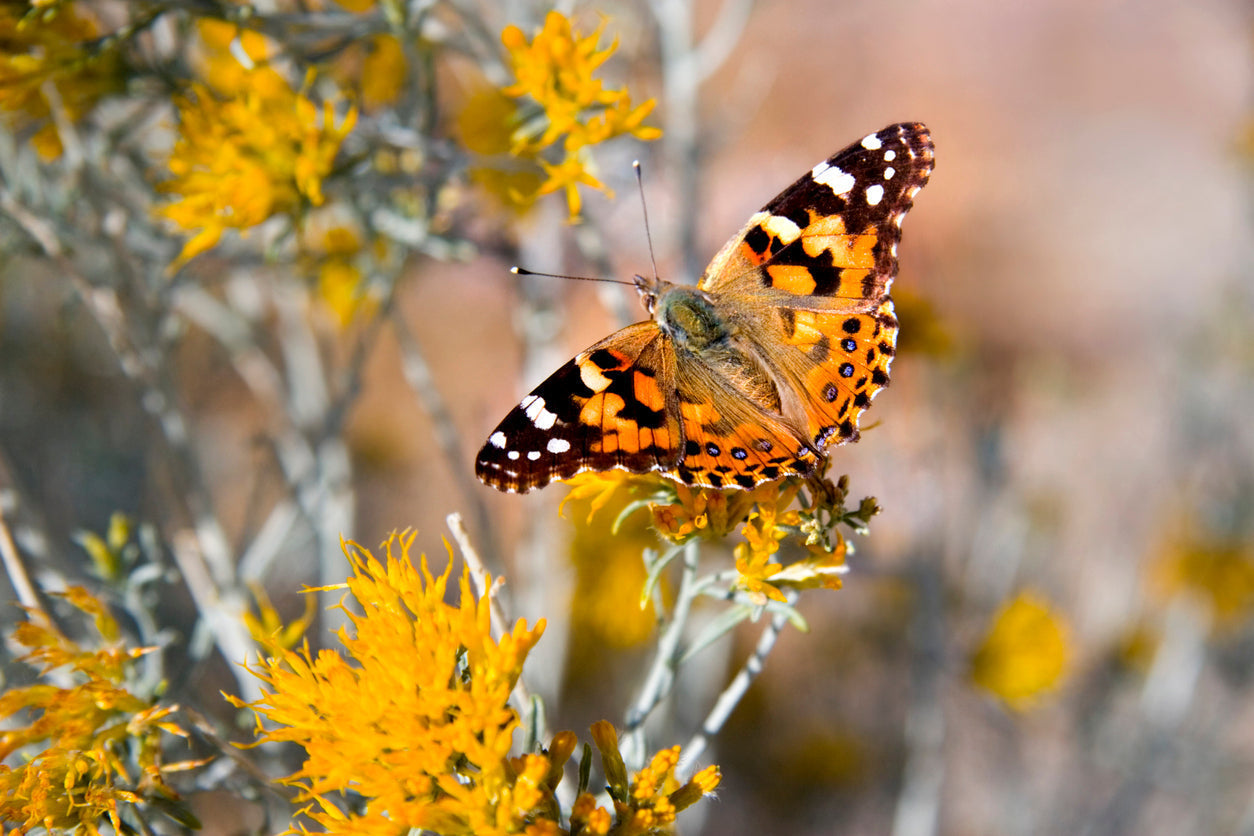

The Monarch Butterfly and the Painted Lady Butterfly are often mistaken for one another, due to their similar orange and black coloring. Many butterfly enthusiasts try to find Monarch caterpillars to buy and raise as butterflies at home. However, raising Monarchs on your own is a very difficult process for a variety of reasons, such as their diet and their complex migration. Read on to discover why the Painted Lady is the preferred choice for your butterfly-raising activities, and why Monarchs should stay wild!
Even though they're both caterpillars, Painted Ladies and Monarchs eat very different things! Let's explore their snacks of choice and how this affects their growth and reproduction.
Painted Lady caterpillars are extremely diverse eaters, thriving on a wide range of host plants. Mallow and hollyhock, both members of the Malvaceae family, are favorites, offering soft, nutrient-rich leaves that support healthy growth. Thistle, the species' traditional wild host plant, is also popular in outdoor populations. It's due to this varied diet that Painted Lady caterpillars (and therefore butterflies) are able to thrive in a wide range of environments!
In contrast, Monarch Caterpillars have a much stricter diet, which causes issues for personal care. Monarch caterpillars feed exclusively on milkweed and no other plant. This exclusive diet isn't just preference, but biological necessity, as milkweed provides the toxic compounds known as cardenolides that make monarchs unpalatable to predators later in life. Because caterpillars eat almost constantly while growing, a steady, fresh supply of milkweed leaves must be available at all times throughout the caterpillar stage.
There are many differences between raising Painted Lady butterflies and raising Monarchs, and it results in one species being much tougher to care for than the other. Let's explore the fascinating differences between these butterflies below:
As they are so widespread, Insect Lore's Painted Lady butterflies can be safely released throughout the continental United States. Their wide ranging diet means that they can find food anywhere, and do not pose any threat to local butterfly populations. Best of all, Insect Lore's Butterfly Raising Kits make raising and releasing your Painted Lady butterflies easier than ever! Each kit comes with a host of helpful accessories to make your experience as fun and stress-free as possible, along with Insect Lore's unique caterpillar food made from vitamins, minerals and some of their favorite plants.
In contrast to Painted Ladies, raising monarchs from caterpillars carries real risks that conservationists increasingly caution against. Overcrowding caterpillars can spread parasites that weakens or harms emerging adults. Captive-reared monarchs raised indoors, (away from natural light and temperature cues they experience on their long and complex migration), may also fail to develop proper migratory instincts, and repeated captive breeding can reduce genetic diversity and disease resistance in wild populations. Additionally, releasing captive-bred monarchs into areas with existing wild populations risks introducing harmful pathogens or genetically diluting local populations. For these reasons, many entomologists recommend supporting milkweed habitat restoration instead of home rearing.
When raising live insects at home, it's important to take conservation and ethics into account. Nature is endlessly surprising and complex, so research must be done to ensure your butterfly raising and release is as eco-friendly as possible!
The Painted Lady boasts one of the widest natural distributions of any butterfly species, found on every continent except Antarctica and South America. Its population is remarkably stable and abundant, with massive annual migrations spanning thousands of miles across continents and oceans. Unlike more vulnerable species, Painted Ladies reproduce prolifically and aren't tied to a single threatened host plant, making their numbers remarkably resilient to environmental pressures. As a result, raising them in classrooms poses no meaningful risk to wild populations, making them an ideal, ecologically responsible choice for hands-on metamorphosis education!
The Monarch butterfly's conservation status is much more serious than that of the Painted Lady. According to the Xerces Society, Monarch populations have declined sharply, dropping approximately 80% in the eastern population and more than 95% in the western population since monitoring began in the 1980s and 1990s. In response, the U.S. Fish and Wildlife Service proposed listing the monarch as a threatened species under the Endangered Species Act in December 2024, (though it is not yet formally listed as of this writing). Due to these pressures, several states and organizations regulate the buying, selling, and rearing of monarchs to prevent overcrowding and disease spread, particularly the OE parasite, which can devastate captive-reared populations and potentially spread to wild monarchs upon release.
|
Factor |
Painted Lady |
Monarch |
|
Host plant / diet |
Mallow, hollyhock, thistle, or Insect Lore food diet |
Milkweed only |
|
Life cycle length |
2 to 3 weeks |
Typically 3 to 4 weeks, more variable |
|
Feeding maintenance |
Low, tolerant of varied or artificial diets |
Daily fresh milkweed required |
|
Habitat upkeep |
Minimal, infrequent cup or habitat cleaning |
Frequent, requires meticulous cleaning to prevent disease |
|
Difficulty level |
Beginner-friendly |
Difficult |
|
Regulatory notes |
No restrictions, stable global population |
Regulated in some regions, handle with extreme care to limit disease spread |
|
Raising kits best suited for |
First-time raisers, classrooms, and quick, low-maintenance projects |
Professional ecologists only |
Though Monarch Butterflies are a beautiful and famous species, they are extremely difficult to care for and raise at home due to their complex migration, incredibly strict diet of Milkweed and risk of transferring disease. Owing to their long migration from Canada to Mexico, Monarchs require specific milkweed species planted in highly specific geographic areas to avoid confusing their migration instincts. A monarch butterfly raised and home and released into the wild may have difficulty finding its way onto its unique migration path.
In contrast, Painted Lady butterflies are not a threatened species, and can be safely released throughout North America at no risk to the local environment! Their highly varied range of feeding plants mean that they can survive and thrive in highly varied ecosystems, whether they are forests, fields, deserts or gardens. Best of all, Insect Lore offers the perfect butterfly raising experience for homes and classrooms! Check out our Live Butterfly Kits here for an at-home adventure, or plan your school curriculum with our Classroom Kits today!
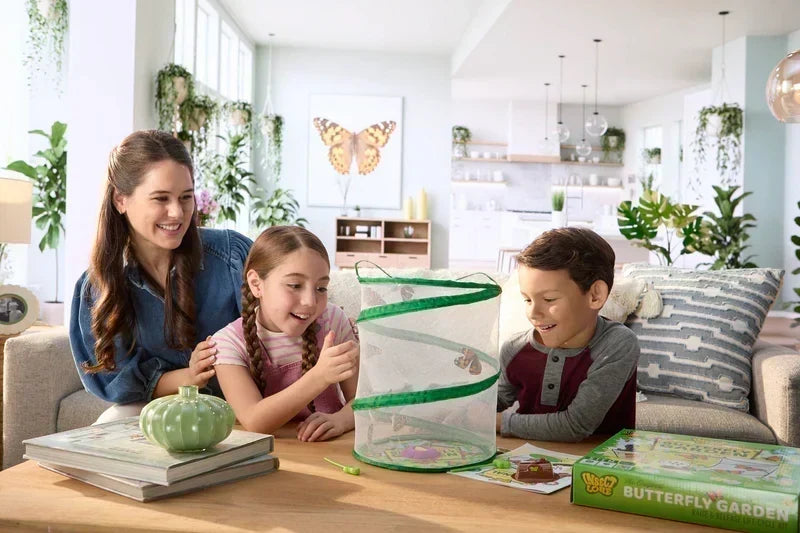

Can't decide which Butterfly Garden habitat is the right choice for you? No problem! We've got the perfect guide to help you find the perfect experience for your life cycle adventure.


From painted wings to handmade decorations, here are some butterfly-themed projects offer the perfect way to learn biology: as well as inspire moments of creativity, discovery, and joy!

Our insects are sensitive to outdoor temperatures. We recommend ordering when daytime temperatures are below 90 degrees.
We are unable to combine redemption fees. If you are redeeming 1-5 voucher codes, please complete separate purchases through our website for each voucher. If you are redeeming 6+ vouchers, please email us at customerservice@insectlore.com with your voucher codes and shipping address and we'll send you a custom invoice for payment.
You redeemed a $title

Check the Box to Add this Special Offer to your Cart
Check the Box to Add this Special Offer to your Cart