
By Spencer McManamna November 04, 2024 4 min read

Ants play a significant role in controlling climate and temperature within their ecosystems through several fascinating behaviors and activities. First, their nesting habits can affect soil properties and moisture retention. By building extensive underground networks, ants help aerate the soil, which enhances water infiltration and can create microhabitats that maintain cooler temperatures, especially in arid environments.

Ants also contribute to vegetation by foraging and interacting with plants. Some species protect plants from herbivores in exchange for food resources like nectar. This promotes plant health and diversity, which in turn affects local climate conditions by influencing transpiration and shading.

Are Ants Cold-Blooded?

Ants are ectothermic, which means they rely on external environmental temperatures to regulate their body heat, as they do not produce enough metabolic heat to maintain a stable internal temperature. Ants are highly influenced by the ambient temperature of their surroundings, which affects their activity levels, foraging behavior, and overall physiology.

In warmer conditions, ants become more active and can forage extensively, while cooler temperatures can slow them down significantly and cause them to retreat into their nests. This dependency on external heat sources means that ants will bask in sunlight or seek shade to manage their body temperature.

What Time of Day are Ants Most Active?

Ants species range from diurnal (active during the day) and nocturnal (active at night).

Diurnal Ants

Diurnal ants, such as many species in the Formica and Camponotus genera, are most active during daylight hours, enjoying the warmth of the sun and using it to enhance their foraging efficiency and social interactions. These ants often take advantage of the increased visibility during the day to scout for food and communicate with colony members.

Nocturnal Ants

In contrast, nocturnal ants, like certain species of Atta and Paraponera, forage and engage in their activities under the cover of darkness, which can help them avoid predators and extreme heat. Nocturnal activity may also be advantageous in hot climates, allowing them to find food resources during cooler nighttime temperatures. 

Ants and Hot Weather

Hot temperatures have a major impact on ant metabolism, appetite, and life cycle, primarily due to their ectothermic nature. Generally, optimal activity for many ant species occurs between 25°C and 35°C (77°F to 95°F), where they exhibit increased foraging and reproductive behaviors. As temperatures rise above this range, particularly beyond 35°C (95°F), metabolic rates may increase initially, boosting activity.

What Temperature is Too Hot for Ants? 

Prolonged exposure to excessive heat can lead to reduced appetite and foraging efficiency, as ants may become stressed and less capable of thermoregulation. Extreme temperatures, typically above 40°C (104°F), can be detrimental, slowing development rates and impairing reproduction, ultimately affecting colony survival.

Climate and Temperature in Ant Colonies

Ants employ a variety of strategies to control climate and temperature within their nests, ensuring a stable environment that supports their activities and colony health. One primary method is the construction of intricate nest architectures, which often include multiple chambers and tunnels. This design allows for better airflow and ventilation, helping to regulate temperature and humidity levels. Some species, such as leafcutter ants, create underground networks that can handle temperature fluctuations by maintaining cooler conditions deep within the nest.

As temperatures rise, ants may modify their nesting strategies, choosing to dig deeper or expand their nests to create cooler environments. species like Formica may increase their foraging activity at dawn and dusk to avoid the peak heat of midday, reflecting a behavioral adaptation to protect their young and preserve moisture within the nest. In extreme heat, some ant colonies may even abandon their nests in search of more suitable habitats.

How Climate Change Impacts Ants

Climate change has a profound impact on ant populations, altering their distribution, behavior, and overall ecology. As global temperatures rise and weather patterns become more erratic, ants face challenges related to food availability, habitat loss, and increased competition from other species. Some ant species are adapting to these changes by shifting their ranges to higher altitudes or latitudes in search of cooler environments. 

Interestingly, a single generation of ants may not experience sufficient temperature shifts to adapt their behaviors in response to changing climates. Ants typically have short lifecycles, allowing for rapid population turnover; however, behavioral changes often require multiple generations to establish. While some ants may initially thrive in warmer conditions, the overall increase in temperature can lead to stress and resource scarcity, which may not be immediately evident in their foraging and reproductive behaviors. Without the ability to adapt quickly enough, populations can decline, leading to potential local extinctions.

The effects of climate change can disrupt the balance of interactions between ants and other species within their ecosystems. For example, rising temperatures can lead to the earlier emergence of flowers, which may not coincide with the ants’ foraging schedules. This misalignment can reduce food availability, impacting not only ant populations but also the broader food web that relies on these key players for seed dispersal and pollination. 

While individual ants may not exhibit immediate behavioral changes in response to temperature shifts, the long-term effects of climate change pose significant threats to their populations. This combination of habitat changes, resource scarcity, and altered ecological interactions can lead to declines in ant abundance.

Explore the Incredible Lives of Ants with Insect Lore

Your quest for knowledge in the hidden world of ants continues! Witness their activity close-up with Insect Lore's Ant Kits and Products.

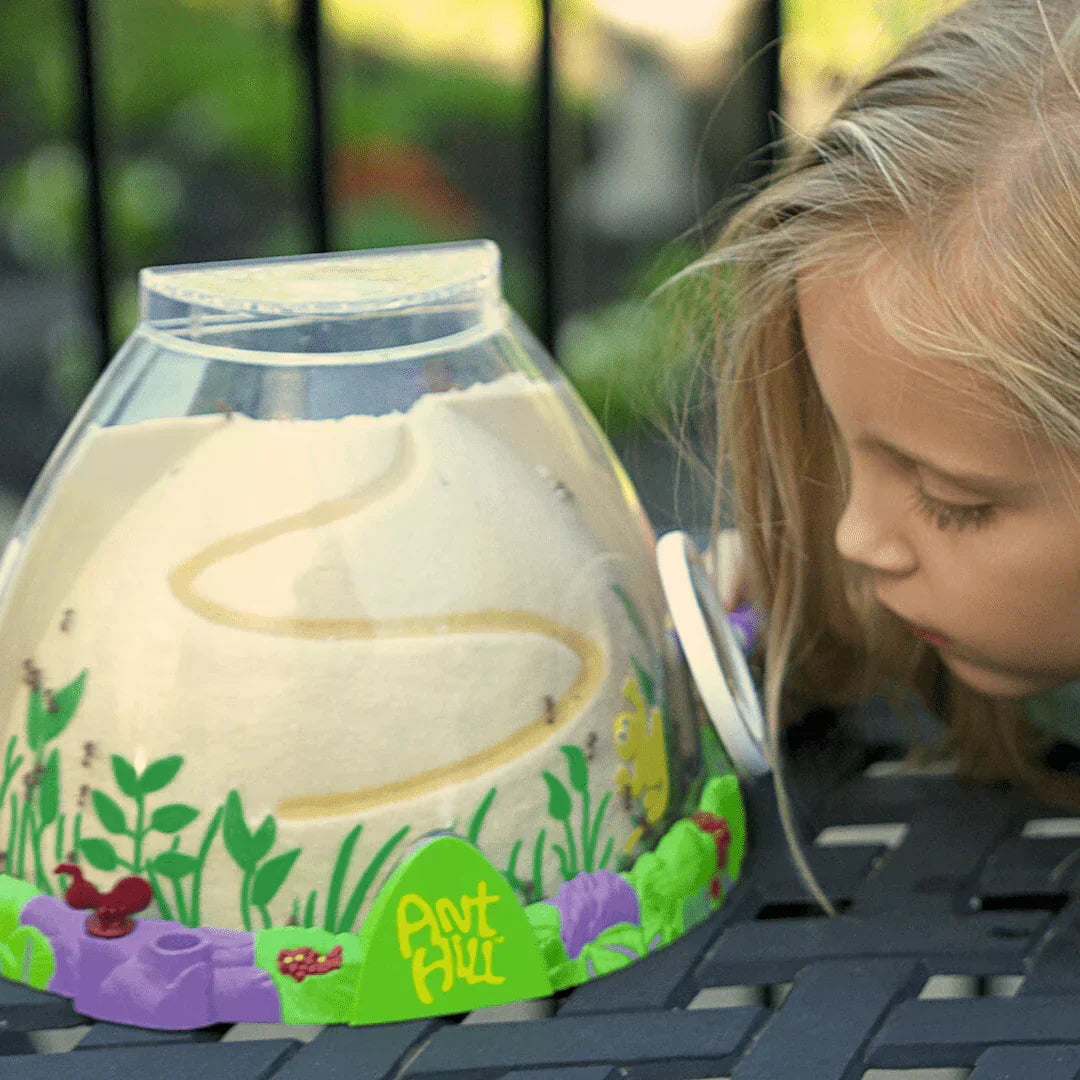
Curious young girl with blonde hair examining an Insect Lore Ant Hill with an insect magnifying glass.
Ant Kit Safety and Care Guide for Teachers

July 08, 2026 4 min read

Insect Lore Ant habitats turn a hidden world of abstract biology into fascinating daily observation, letting students witness colony behavior, cooperation, and lifecycle firsthand and in front of their very eyes.

Read More
Educational Benefits of Ant Kits for Kids and Classrooms

June 01, 2026 4 min read

Dig a little deeper! Ant kits are powerful hands-on learning tools that bring science to life, allowing students to observe real insect behavior while exploring biology, ecology, and complex systems through direct, engaging experience.

Read More
How Do Ants Communicate? Understanding Ant Pheromones

June 01, 2026 5 min read

Ant pheromones guide everything from foraging trails to alarm signals, allowing thousands of individuals to act as one coordinated superorganism. These chemical messages are precise, adaptable, and essential for survival. By decoding how ants communicate through pheromones, scientists are able to find remarkable insights into collective behavior, ecology, and even innovative solutions for human technology and complex systems.

Read More