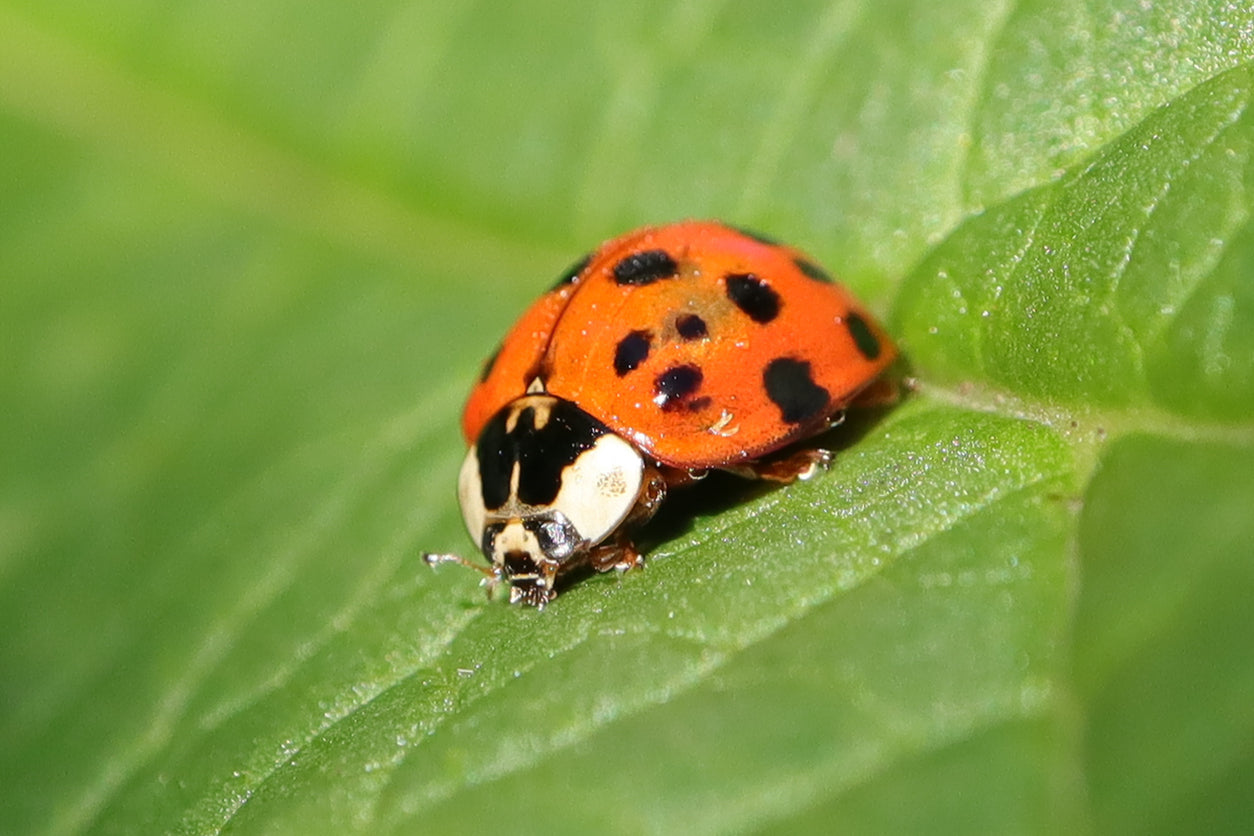

Ladybugs are beloved garden allies that keep pests in check, but their look-alike, the invasive Asian lady beetle, often sneak indoors during fall and spring, and can threaten ladybug populations. In this blog, we’ll help you tell them apart so you can protect both your home and beneficial ladybugs from this aggressive impostor.
Common ladybugs (generally species in the Coccinellidae family) and Asian lady beetles (Harmonia axyridis) share some similarities in their general appearance but also exhibit distinct physical characteristics.
Common ladybugs are bright red or orange with a consistent tone, giving them their familiar, cheerful look. Asian lady beetles are most often red but will vary widely in color, from pale yellow-orange to deep red, which often leads people to mistake them for different species.
Ladybugs are smaller, usually around 5–7 millimeters in length. Asian lady beetles are slightly larger at 5.5–8.5 millimeters, with a more elongated oval body that makes them appear flatter when viewed from the side.
Native ladybugs typically display seven distinct, evenly spaced black spots. Asian lady beetles can have anywhere from zero to nineteen irregular spots, or none at all, making their appearance less uniform and often more confusing to identify.
The pronotum, the shield-like area behind the head, differs between species. Ladybugs show a mostly black area with small white “cheeks,” while Asian lady beetles feature a bold black “M” or “W” pattern on a white background.
Ladybugs have a rounded, dome-like body that looks smooth and compact. Asian lady beetles appear more oval and slightly flattened, which helps them slip through small crevices when seeking shelter indoors.
Ladybugs are gentle and rarely interact with humans, preferring to stay outdoors in gardens. Asian lady beetles, however, can bite when provoked and tend to gather in large groups, especially inside homes during seasonal shifts.
Ladybugs remain active outdoors during warm months and retreat naturally in cooler weather. Asian lady beetles, seeking warmth, invade homes in fall and reappear in spring, often clustering on sunny walls and windows.
When disturbed, ladybugs produce little to no odor. Asian lady beetles secrete a yellow, foul-smelling fluid that can stain surfaces and irritate skin, which is a key sign of their presence indoors.
Ladybugs are valuable pest controllers that protect gardens by feeding on aphids and other soft-bodied insects. Asian lady beetles also eat pests but compete with native ladybugs for food and habitat, disrupting local ecosystems.
|
Feature |
Common Ladybug (Native) |
Asian Lady Beetle (Invasive) |
|
Color |
Bright, consistent red or orange |
Ranges from pale orange to deep red |
|
Spots |
Usually 7 distinct black spots |
0–19 irregular black spots or sometimes none |
|
Size |
5-7 millimeters |
5.5-8.5 millimeters |
|
Pronotum |
Mostly black with small white “cheeks” |
Prominent white “M” or “W” shape on black background |
|
Body Shape |
Rounded and dome-like |
Slightly larger and more oval, flatter profile |
|
Behavior |
Gentle, prefers gardens and plants |
Aggressive, can bite, gathers in large indoor clusters |
|
Seasonal Activity |
Active outdoors in warm months |
Invades homes during fall and spring for warmth |
|
Odor/Secretions |
Mild or none |
Emits foul-smelling yellow fluid when disturbed |
|
Ecological Role |
Beneficial pest controller |
Competes with native ladybugs for food and habitat |
Asian lady beetles can potentially harm plants, especially when present in large numbers.
While Asian lady beetles mainly feed on aphids and other soft-bodied insects, they may turn to fruit when aphid sources are scarce. Their abundance can also cause indirect damage, as their search for prey sometimes harms plant tissues. During colder months, their tendency to seek indoor shelter can also create nuisances and occasional damage to ornamental plants or crops.
Asian lady beetles (Harmonia axyridis) pose several threats to common ladybugs (Coccinellidae species) when they coexist in the same habitats.
One significant threat is direct competition for resources such as food and overwintering sites. Asian lady beetles are known for their aggressive behavior, often outcompeting native ladybugs for prey like aphids and other soft-bodied insects. This competition can reduce the available food sources for common ladybugs, potentially impacting their survival and reproductive success.
Another concern is the transmission of microsporidian parasites, specifically Nosema spp., by Asian lady beetles. These parasites can infect and weaken native ladybugs, affecting their health and ability to reproduce.
Furthermore, Asian lady beetles are generally more adaptable to a wide range of environmental conditions and habitats compared to many native ladybugs, giving them a competitive edge in colonizing and occupying shared ecosystems.
The Asian lady beetle was originally introduced into the United States around 1916 as a biological control agent to manage aphid populations in agricultural settings. However, it wasn't until 1988 that these beetles became established in North America, particularly in the southeastern United States. Since then, Asian lady beetles have rapidly spread across the continent, becoming an invasive species with significant ecological and economic impacts.
Physical Removal: Use a vacuum cleaner to remove Asian lady beetles from inside your home, then move outside and carefully empty the contents into a sealed trash bag.
Seal All Entry Points: Close any cracks or gaps around doors, siding, windows, screens, etc. to prevent interior access.
Create a Barrier Around Your Home: Trim vegetation around the perimeter of your home to store wood at least 15 feet away.
Use Natural Repellents: Spray citrus oil or citronella to repel Asian lady beetles.
Turn Off Outside Lights at Night: Limit outdoor illumination by using motion-activated fixtures and cooler, low-heat bulbs.
Now that you know the difference between beneficial ladybugs and invasive Asian lady beetles, continue your insect adventure! Explore our Ladybug Kits!
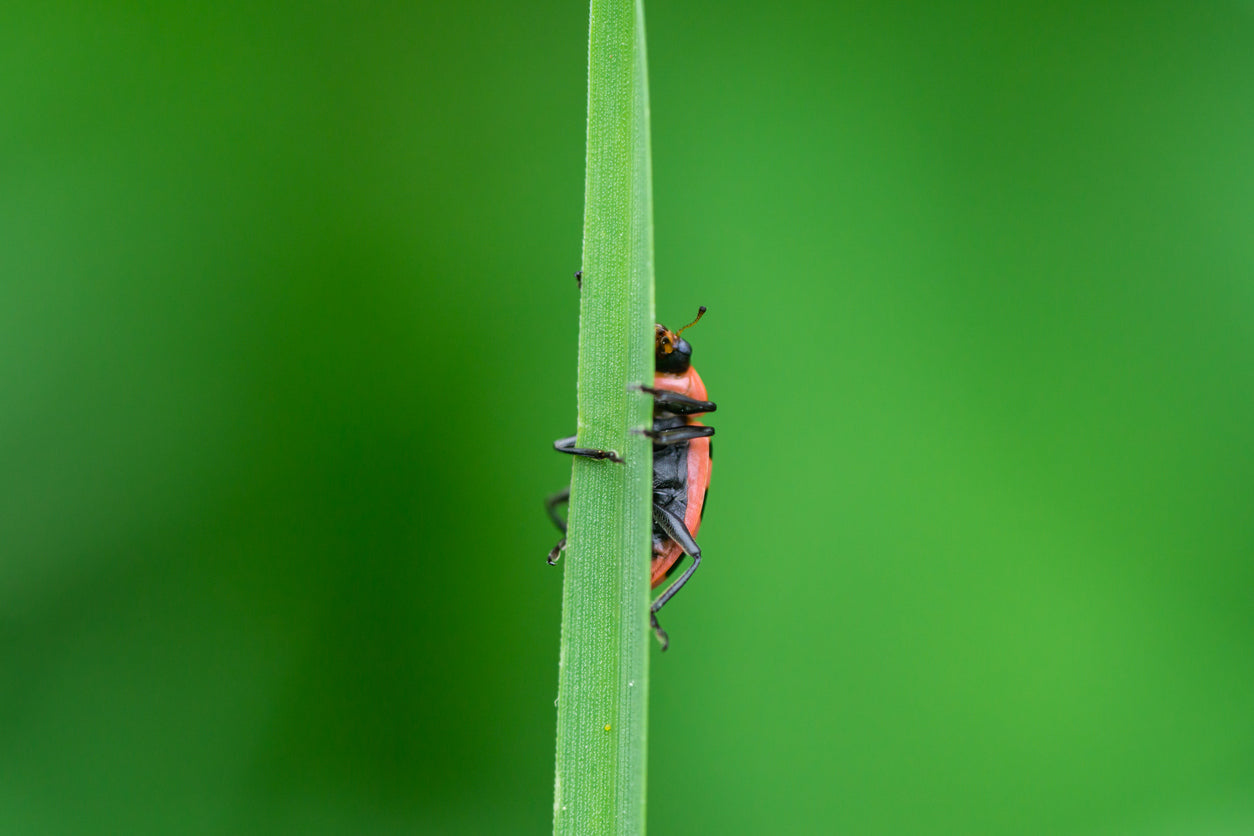

Nature lovers have often wondered how our little ladybug friends manage to survive a season that can often be quite harsh for insects. Read on to discover how ladybugs survive and thrive in both high and low temperatures, and what the future holds for them with the approach of climate change.


Have you ever wondered what our ladybug friends like to munch on? It's a surprisingly varied diet! Read on to learn more about the incredible things our little ladybug friends like to snack on!
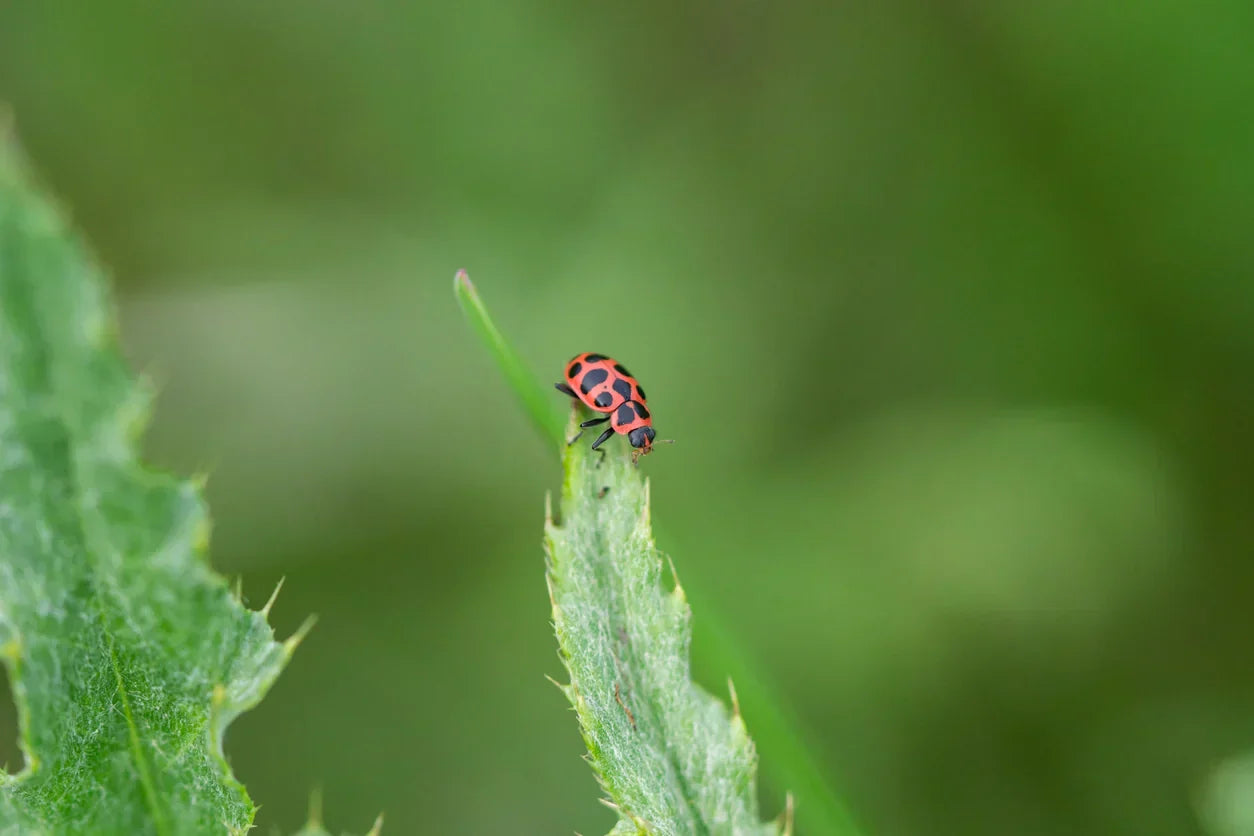

Unlock the secret to a thriving and healthy garden! In this article, we delve into the simple yet effective methods to attract these delightful beetles into your garden, ensuring a natural balance and beautiful flowers.

Our insects are sensitive to outdoor temperatures. We recommend ordering when daytime temperatures are below 90 degrees.
We are unable to combine redemption fees. If you are redeeming 1-5 voucher codes, please complete separate purchases through our website for each voucher. If you are redeeming 6+ vouchers, please email us at customerservice@insectlore.com with your voucher codes and shipping address and we'll send you a custom invoice for payment.
You redeemed a $title

Check the Box to Add this Special Offer to your Cart
Check the Box to Add this Special Offer to your Cart