


Mini Blog: Insect Mimicry
While you're preparing to dress up as your favorite ghost, ghoul or goblin for Halloween, some of our insect friends wear permanent costumes!
Insect Mimicry is when an insect copies the physical traits of something else in order to hide from predators.
Here are five fascinating examples of insect mimicry!
Stick Insect Camouflage
Can you spot the stick insect? Stick insects camouflage themselves as twigs to avoid predators. Many insects hide by mimicking their environment and have evolved unique body shapes to camouflage themselves amongst leaves and sticks. Even our very own Painted Lady Butterfly has more a more muted appearance when it's wings are closed for camouflage!

Butterfly Camouflage
Is this a Monarch Butterfly? No! It's a Viceroy Butterfly. Viceroys and Monarchs both taste bad to predators and are what's called "Mullerian Mimics". A Mullerian Mimic is an evolutionary adaptation where two species evolve to look alike and share a common warning signal to predators. Predators see their orange and black wings, and are reminded that both species are unpalatable! Want to know the difference? Viceroy Butterflies have small crescent shaped white spots at the bottom of their wings, while Monarchs have small white dots!

Compare the above Viceroy Butterfly with this mighty Monarch!

Fly Camouflage
Does this striped insect look familiar? You might be surprised to find out it's a Hoverfly! This hoverfly shares the warning coloration of bees and wasps, but without the ability to sting. This is an example of what's called Batesian Mimicry, where a harmless insect mimics one that can cause harm.

Caterpillar Camouflage
During its caterpillar stage, the Giant Swallowtail Butterfly mimics something unusual — bird droppings! Since predators don't want to snack on waste, this caterpillar's camouflage is very effective!

Spider Camouflage
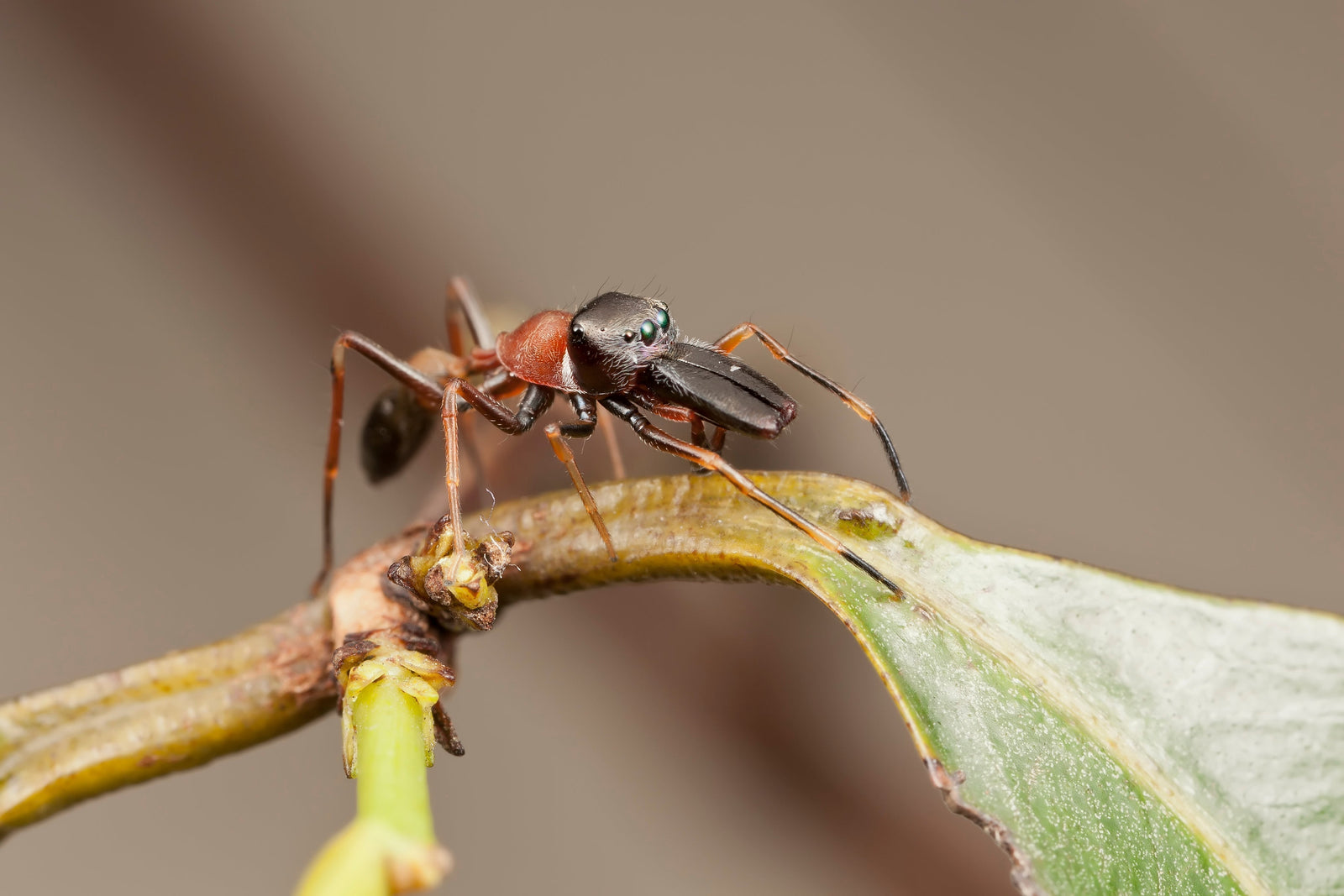
Is this an ant? No! This jumping spider mimics an ant for two reasons. To hide from predators that don't eat to ants, and to infiltrate ant hills to find prey!

What type of camouflage would you use?


How to Create a Butterfly Life Cycle Project at Home for Summer Break
From painted wings to handmade decorations, here are some butterfly-themed projects offer the perfect way to learn biology: as well as inspire moments of creativity, discovery, and joy!

Common Summer Insects to Explore with Children Over Break
Flutter along with us as we explore some practical ways parents and educators can create meaningful and fun-filled experiences while observing the world of insects.

Butterfly Raising Kits: The Perfect Easter Gift
Celebrate the Easter bloom with Insect Lore! Easter arrives every year like the gentle turning of a page of a book, marking a new season of renewal, change, hope, and fresh beginnings.

Enter Your Voucher Code Below
Our insects are sensitive to outdoor temperatures. We recommend ordering when daytime temperatures are below 90 degrees.
We are unable to combine redemption fees. If you are redeeming 1-5 voucher codes, please complete separate purchases through our website for each voucher. If you are redeeming 6+ vouchers, please email us at customerservice@insectlore.com with your voucher codes and shipping address and we'll send you a custom invoice for payment.
$title
Thank you for Redeeming your voucher!
You redeemed a $title
Redemption Fee :$redemptionFee
$upsellList
$ctaLabel

Don't miss this special one Time Offer.
Check the Box to Add this Special Offer to your Cart
$upsellTitle
$upsellPrice
Don't miss this special one Time Offer.
Check the Box to Add this Special Offer to your Cart
$upsellTitle
SAVE $upsellSavePrice